On this page
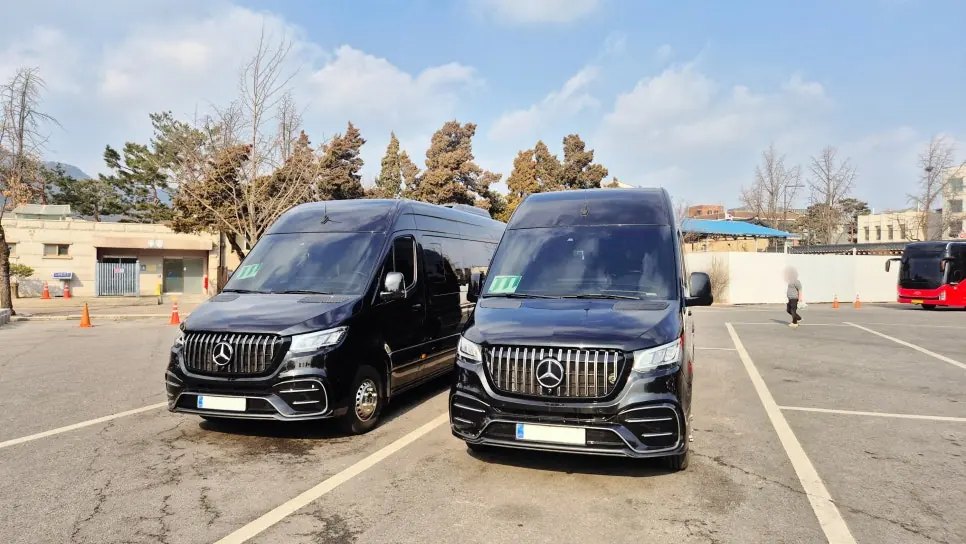
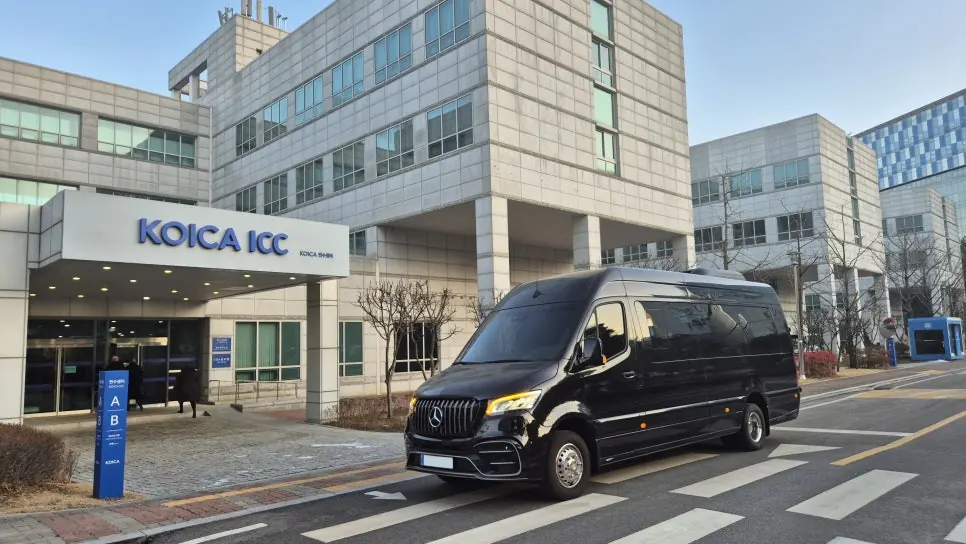
An institutional visit depends on the details around each arrival: the correct gate, the receiving contact, the permitted stopping area and the next departure. Grand Limousine’s Daejeon report describes a Sprinter operation for representatives of an international organization visiting several institutions, with those transitions treated as part of the official programme.
Read the case at the right level
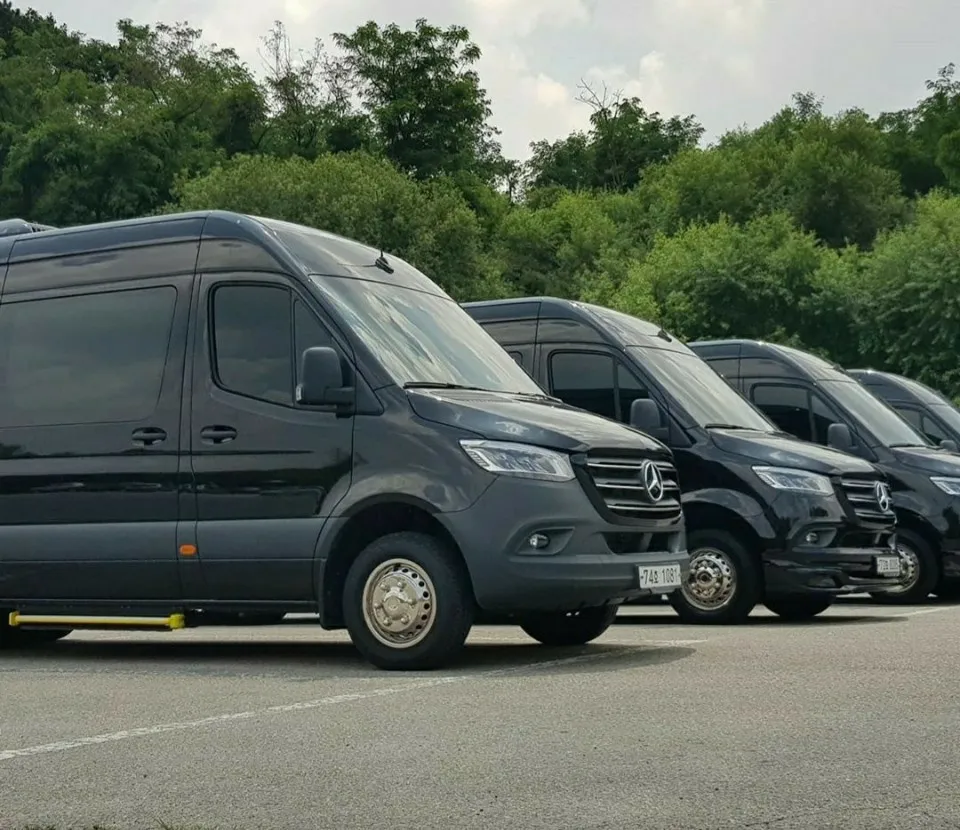
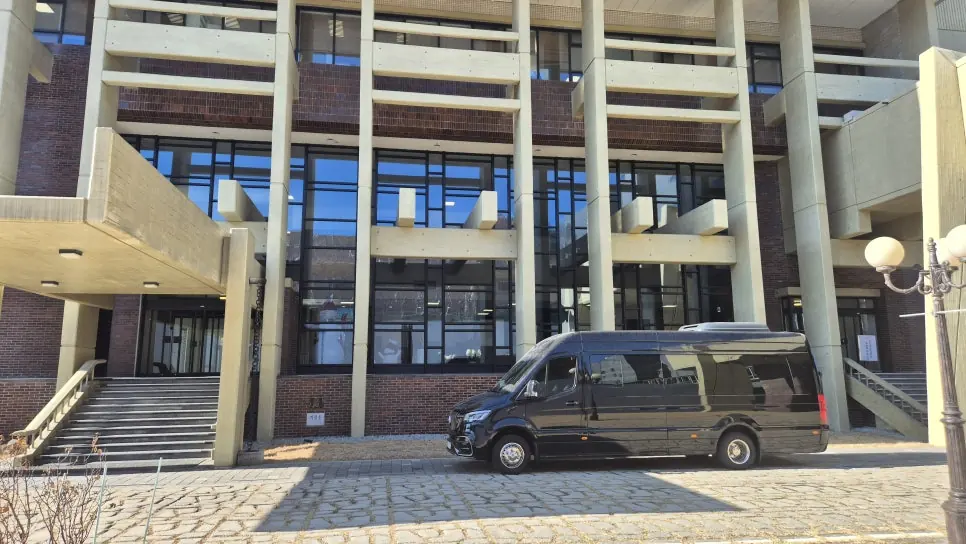
The published account identifies one Mercedes-Benz Sprinter and a sequence of visits to government, research and international cooperation institutions in Daejeon. It describes advance confirmation of entry routes and stopping zones, suited chauffeur presentation and readiness for reboarding. It does not publish delegate names, a complete venue list or a detailed security plan. Those omissions should remain omissions when the case is used as a planning example.
The transferable point is coordination between transport and the host’s rules. A premium vehicle does not itself provide permission to enter a controlled site or wait beside its main door.
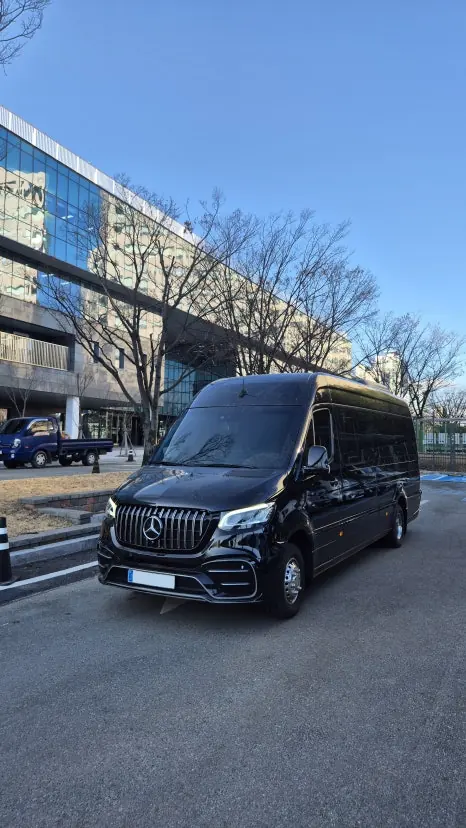
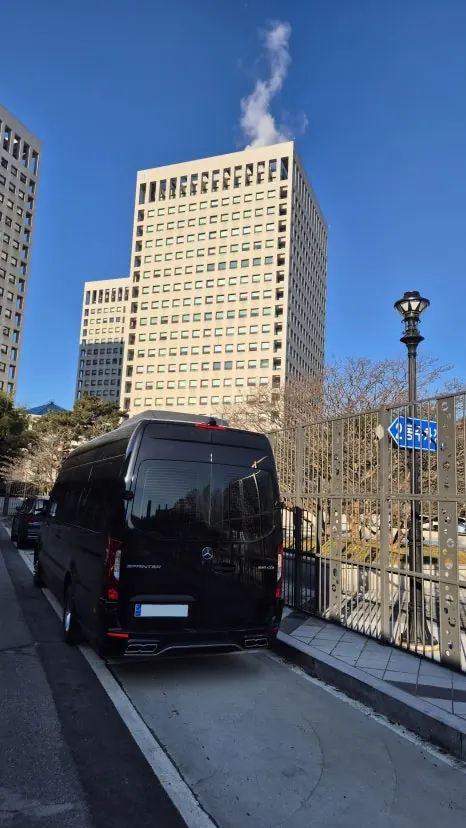
Obtain a separate access brief for each host
Ask the receiving office to name the gate, building entrance and contact person. Establish whether vehicle registration, a driver name or guest identification must be submitted beforehand, and let the host specify the required process. Different institutions can apply different rules on the same day. Keep the approved instructions together with an address in Korean so the chauffeur can distinguish a visitor entrance from a service road.
Send changes through the delegation coordinator. If a gate changes, update the vehicle instructions and the host contact together; an old map pin should not override current reception advice.
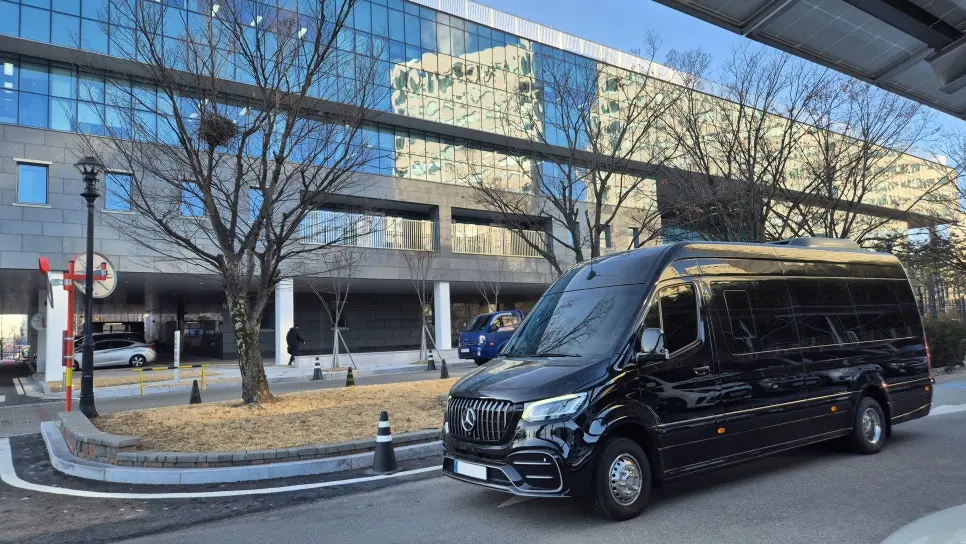
Connect the visit sequence
A multi-institution day needs both meeting times and movement instructions. Put fixed appointments first, then add boarding, gate processing and the transfer to the next site. Avoid using a single city-to-city driving estimate as the entire transport allowance. The approach inside a campus or research complex can be a separate part of the arrival, especially when visitors must collect passes before reaching the receiving building.
| Stage | Confirm with the host | Record for the chauffeur |
|---|---|---|
| Arrival | Visitor gate and check-in procedure | Approach address and contact |
| During the visit | Approved waiting location | Repositioning instruction |
| Departure | Who signals that guests are ready | Boarding point and next destination |
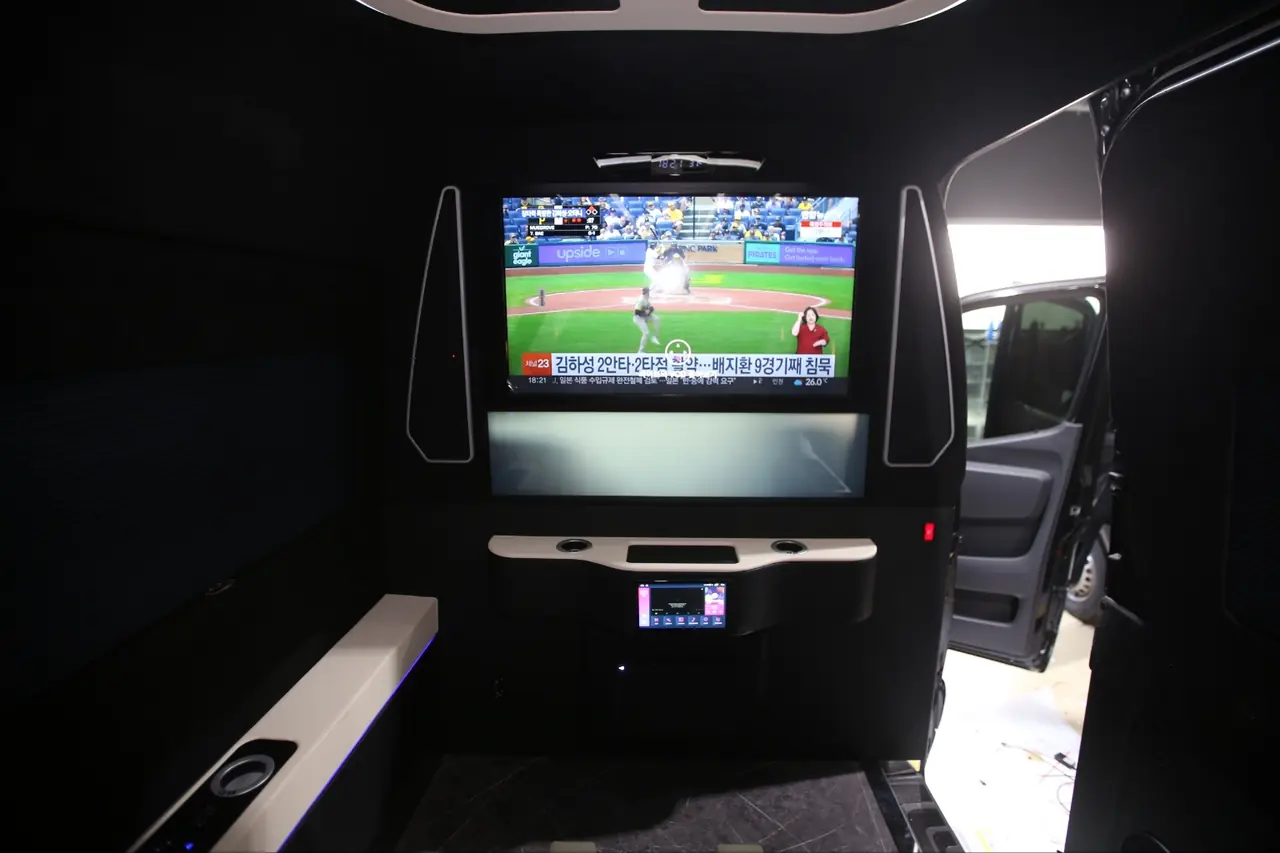
Make standby and reception practical
In the source operation, the chauffeur’s role included a composed appearance, checking the surroundings and preparing the next boarding. For a new delegation, agree who meets the party at the entrance and whether the vehicle stays nearby or moves to a designated parking area. The person ending the meeting should know how to request collection, rather than leaving guests to search for a vehicle after they step outside.
Reception preferences should be shared in advance, including language needs and the order of boarding. Chauffeur protocol remains subject to site instructions; it does not imply security clearance, police escort or priority road access.
Specify the new visit independently
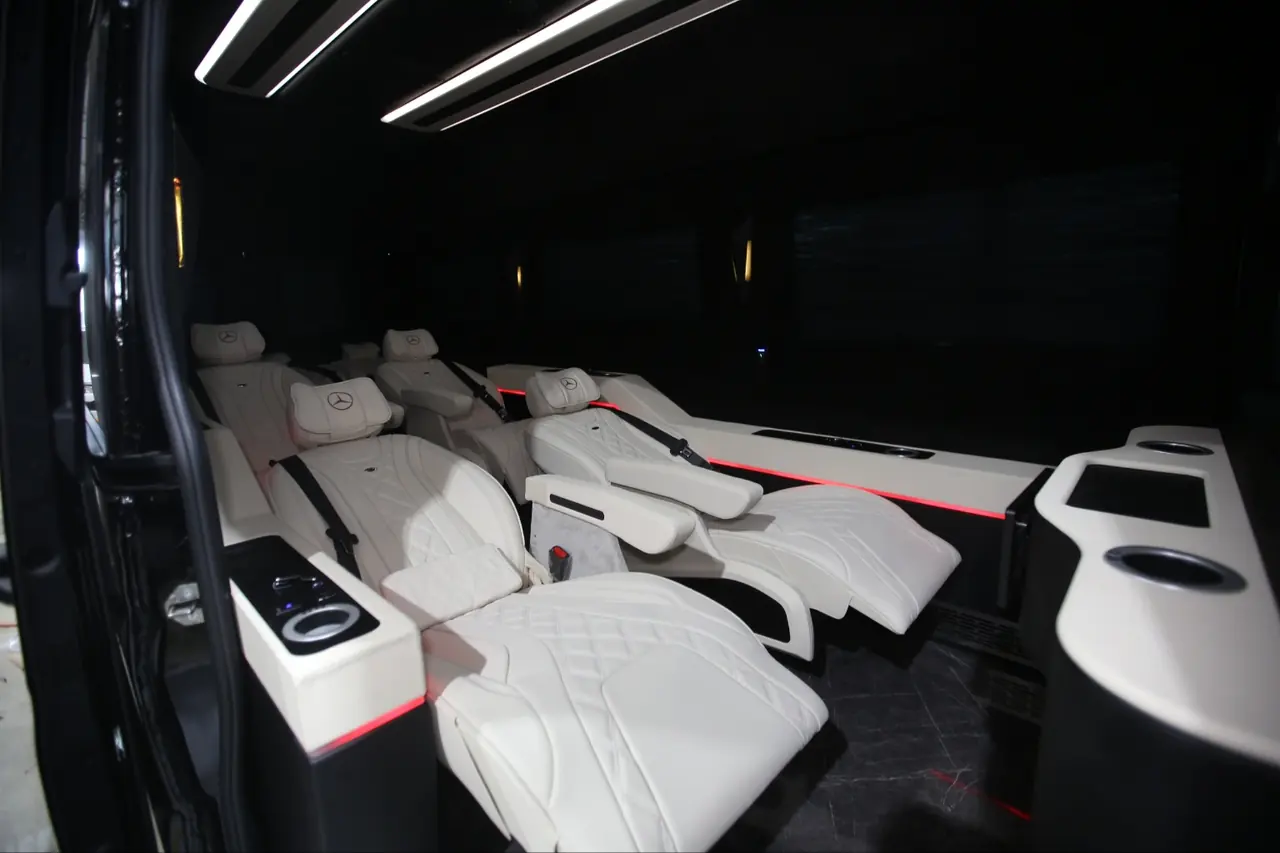
The original article names a Sprinter but does not establish the seating configuration for another trip. The current Sprinter 9 brochure standard is two front seats plus seven rear seats, and usable guest capacity still depends on the agreed assignment and baggage. Supply the delegation size, luggage, meeting order, receiving contacts and return destination so the operator can propose a practical vehicle and route.
Ask for written terms covering waiting, schedule extension and additional stops. Keep official programme decisions with the delegation and host; transport planning should support their agenda without promising an unverified institutional outcome.
Frequently asked questions
Does the case identify the delegates?
It describes representatives of an international organization without publishing their names. The article should be read as an operational example, not a named endorsement.
Can a chauffeur guarantee entry to an institution?
Entry is controlled by the host institution. Obtain its approval and required visitor process, then share those instructions with the transport coordinator.
Why confirm a waiting area as well as the address?
A main entrance may allow drop-off but prohibit extended waiting. An approved standby location and collection signal help keep the next boarding organized.
Are interpretation and formal security services included?
The confirmed scope is chauffeured transport, protocol and agreed guidance. Specialist interpretation and security arrangements should be organized separately with the relevant providers.