On this page
A Sprinter can support a corporate group well when its layout and operating plan match the assignment. The vehicle name alone does not create a meeting room, an accessible entrance or a faster route. Begin with the people and tasks, then verify the assigned cabin, loading space and destination access.
Choose among the current Sprinter layouts
Grand lists Mercedes-Benz Sprinter Limousine versions with 9, 10 and 15 total seats. Their layouts are front 2 plus rear 7, front 2 plus rear 8, and front 2 plus rear 13 respectively. These are total seat figures, not guaranteed corporate guest capacities with luggage. Establish whether an interpreter, host or working coordinator needs a rear position, then assess the equipment and bags beside that seating plan.
A larger nominal total should not override the need for appropriate space, safe access or a useful distribution of roles.
| Fleet listing | Published layout | Assignment question |
|---|---|---|
| Sprinter Limousine · 9 | Front 2 + rear 7 | Will all intended guests sit in the rear? |
| Sprinter Limousine · 10 | Front 2 + rear 8 | How do hosts and interpreters fit? |
| Sprinter Limousine · 15 | Front 2 + rear 13 | Does the full luggage load fit safely? |
| Two-vehicle proposal | Each layout confirmed separately | Which team and bags use each car? |
Design a short briefing rather than assuming an office
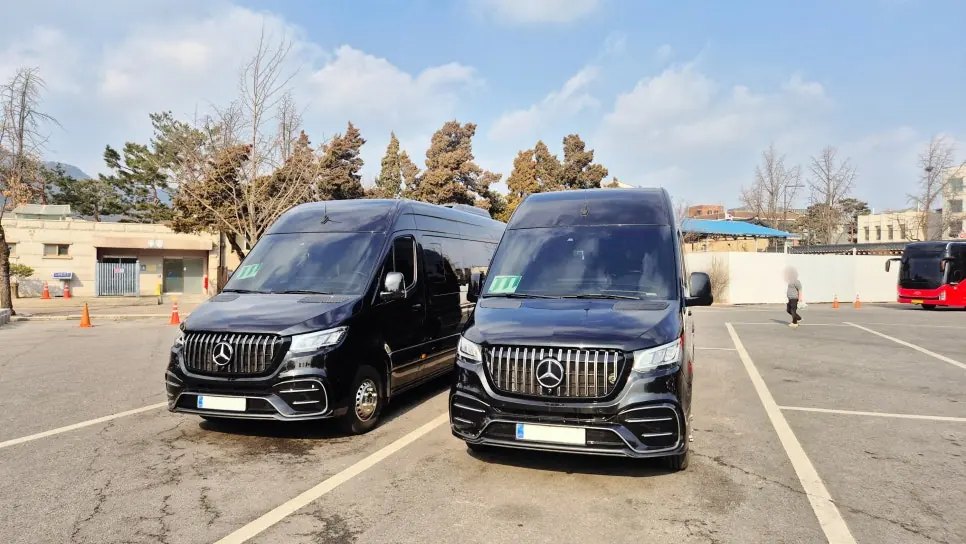
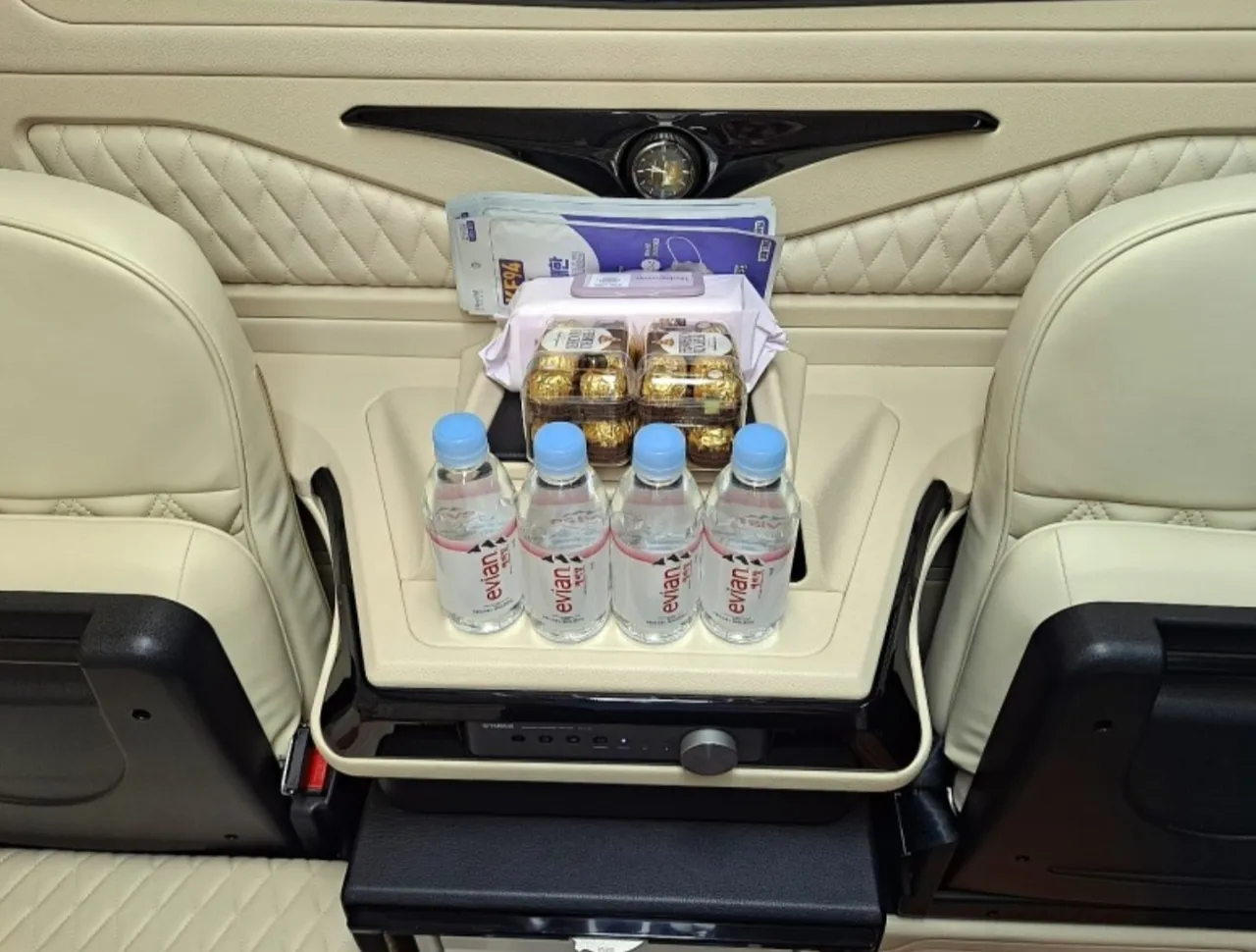
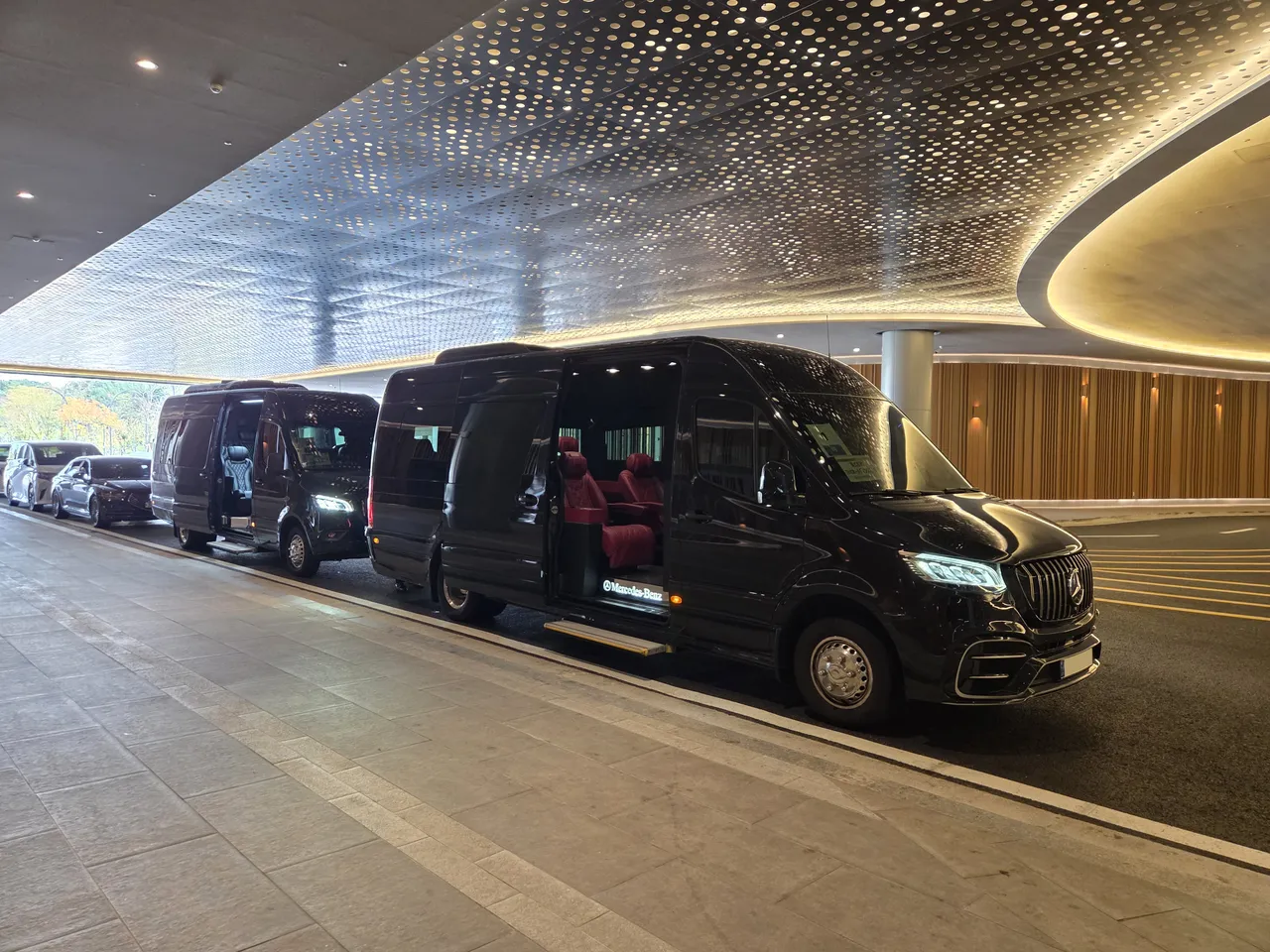
Grand’s corporate case describes two Sprinters used for briefings and role allocation between appointments. It shows how a suitably prepared assignment can support shared information, not that every cabin has the same monitor or seating equipment. If a screen, connection, charging facility or work surface is important, request confirmation for the assigned vehicle and test the intended material before relying on it. Carry an offline fallback on individual devices.
Use the drive for a concise destination brief: entrance, host, order of arrival and the person who handles reception.
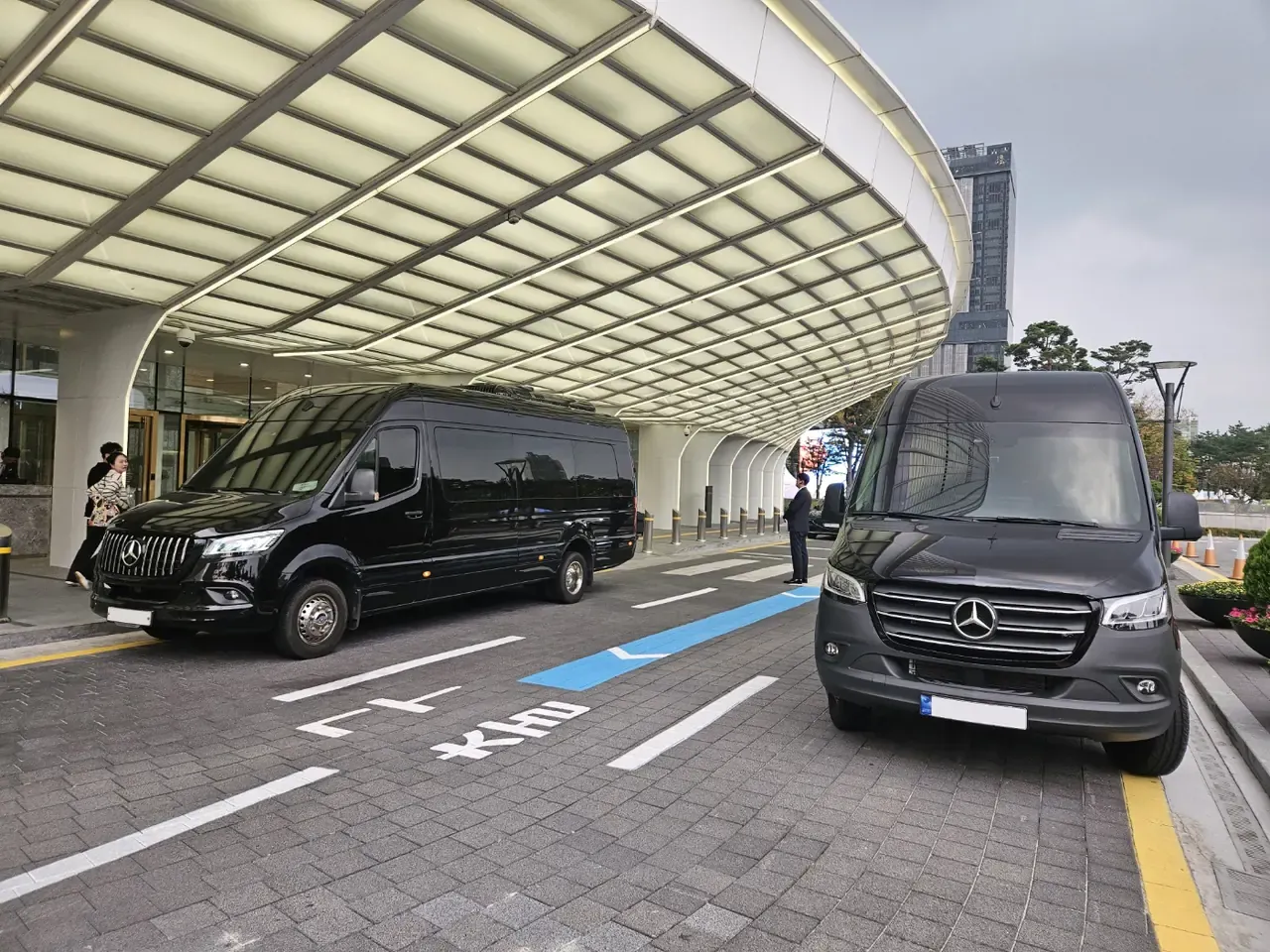
Check height and boarding at each venue
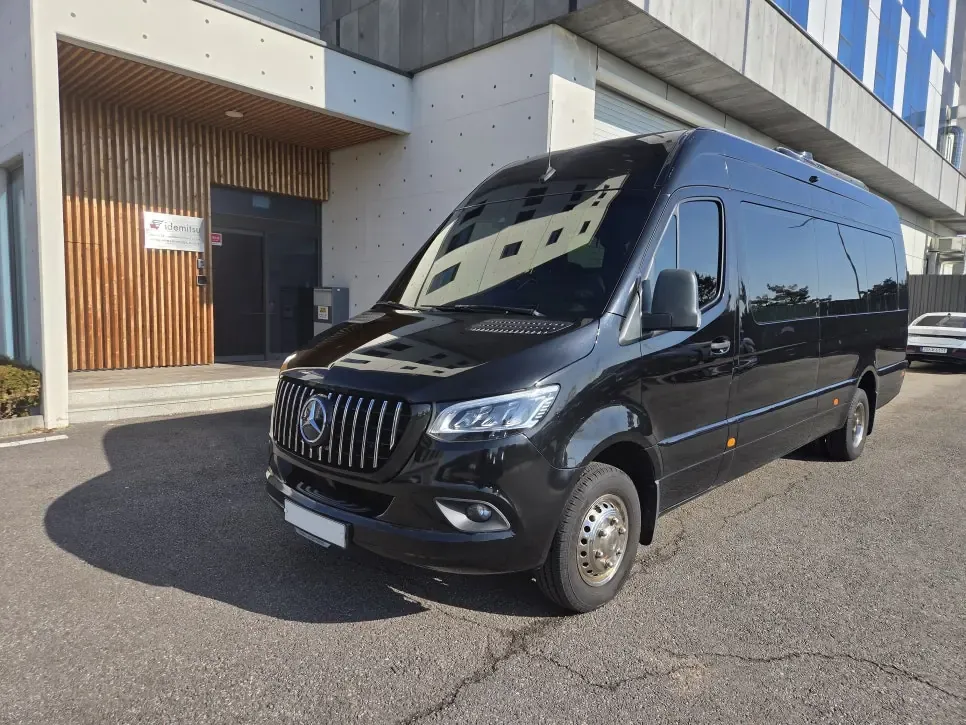
Ask for the assigned vehicle’s relevant dimensions and compare them with the hotel, office and event venue’s access restrictions. A high-roof vehicle may need a surface loading point rather than an underground route. Obtain that permitted location from the site and clarify where the vehicle can wait. Keep the walk manageable and allow a safe boarding sequence. Do not infer wheelchair access from cabin height or interior room.
The same access check is needed at the final destination and return pickup, not only the first hotel.
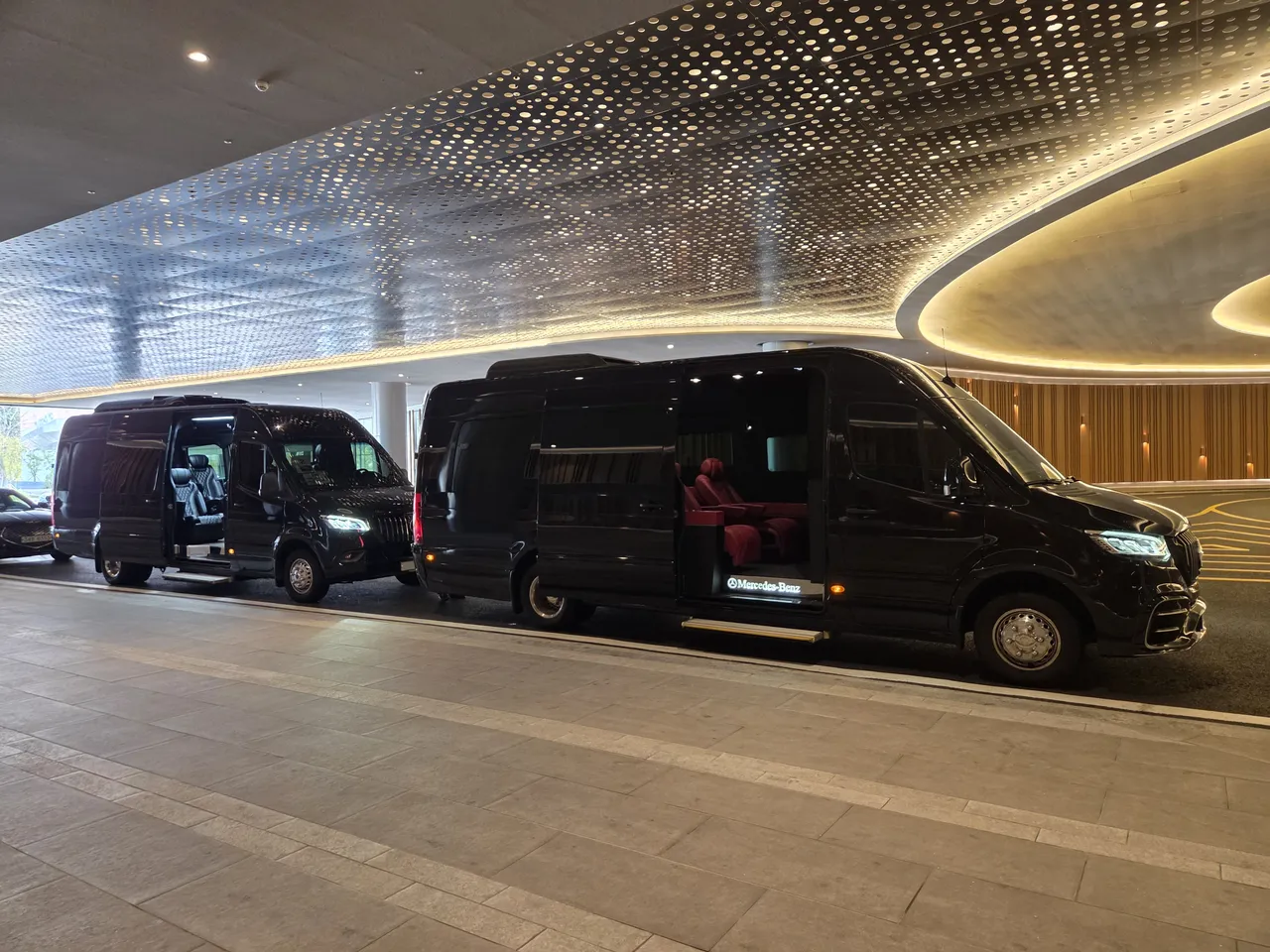
Use ordinary information controls in the cabin
A private vehicle offers separation from public transport, but it is not a certified secure communications environment. Follow company rules for confidential calls, screens and documents. Request discreet communication and define who receives the itinerary, while avoiding unnecessary personal information in signs or group messages. Any network capability, partition or privacy feature must be verified rather than inferred from a promotional image of another vehicle.
Assign one person to record decisions from the briefing so the host does not have to repeat the discussion in a busy lobby.
Build reliability through coordination
Do not base the timetable on assumed bus-lane privileges, special airport lanes or an ability to bypass congestion. The operator must follow the rules applicable to the actual vehicle, road and journey. Build a realistic route and buffer around the meeting requirements. For two vehicles, allocate guests by role and destination, label the bag plan and agree a common contact. The vehicles can travel independently to the same handoff without needing to remain physically together.
Before approval, confirm the layout, passenger positions, luggage, required equipment, language arrangement, venue loading points and written timing boundaries.
Frequently asked questions
Are all Sprinter limousines equipped for presentations?
No uniform equipment should be assumed. Grand’s case describes features used on that assignment; verify the screen, connections and other requirements on the vehicle allocated to you.
Can a Sprinter use special lanes to guarantee arrival?
Do not plan on that basis. Road access depends on applicable rules and the actual assignment, while congestion and venue access still require a realistic schedule.
Does the published seat number mean rear guest capacity?
No. The 9, 10 and 15 totals include two front seats. Their published rear layouts are 7, 8 and 13 respectively, before assessing luggage and other requirements.
When are two Sprinters useful?
Compare a split when teams have different destinations, briefing needs or luggage. Allocate people and bags explicitly and obtain availability and a quote for both assignments.